
Subcommittee Ranking Member Nadler’s Opening Statement at Subcommittee Hearing on Trump’s Politicization of Merger Review
Washington, D.C. (January 7, 2026)—Today, Rep. Jerrold Nadler, Ranking Member of the Subcommittee on the Administrative State, Regulatory Reform, and Antitrust, delivered opening remarks at a subcommittee hearing on the Trump Administration’s politicization of antitrust and merger review, working to benefit the President’s cronies and force pro-Trump media content.
Below are Ranking Member Nadler’s remarks, as prepared for delivery, at today’s hearing.
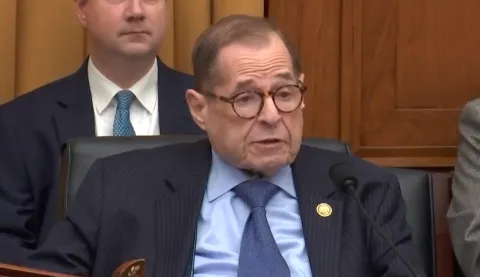
WATCH Ranking Member Nadler’s opening statement.
Ranking Member Jerrold Nadler
Subcommittee on the Administrative State, Regulatory Reform, and Antitrust
“Full Stream Ahead: Competition and Consumer Choice in Digital Streaming”
January 7, 2026
Mr. Chairman, the entertainment and media landscape has been transformed in recent years. Many of these changes have brought undeniable benefits, such as streaming services that give viewers more options at their fingertips than ever before. But many of these changes have also come at a cost, as lax antitrust enforcement and waves of consolidation have concentrated power in just a few major players.
And one thing has seemed to be constant over the last few decades: a merger involving Warner Brothers. It began with the disastrous AOL-Time Warner merger in 2000, then the short-lived partnership with AT&T in 2019, and then its latest incarnation since 2021 as Warner Brothers Discovery. And now, once again, Warner Brothers is up for sale to another media giant.
This time, it has accepted a bid from Netflix, the global leader in streaming services, and a major content producer in its own right, to control Warner’s streaming and studio assets, including such mammoth properties as DC Studios, HBO and HBO Max, and Warner Brothers’ motion picture and television groups, as well as Warner’s 128 million streaming subscribers.
What we know today about this proposal raises a host of questions about its effect on the pricing, production, and distribution of content going forward. We have also heard great alarm from the movie theater industry, which despite claims from Netflix that it will keep theatrical businesses operating largely as they are, takes seriously comments from its co-CEO, who called movie theaters “an outmoded idea” and “not consumer friendly.”
Further, labor groups like the Writers Guild of America and the Directors Guild have raised concerns and say that this proposed merger is not in their interest or the public’s.
Serious concerns have been raised about whether this deal, which by some measures would give the merged company over 30% of the streaming market, could reduce competition; diminish consumer choice; raise subscription prices; threaten jobs, wages, and working conditions in the creative industries; and reduce diversity of content and viewpoints.
Netflix argues that this merger would allow it to better compete with the range of other platforms that are battling for eyeballs and attention from viewers, including other streaming giants, like YouTube; traditional movies and television; social media; and more, but if Netflix must get bigger in order to compete, that is a sign of a market that is already highly out of balance.
Under the Netflix deal, Warner’s cable channels—including, most notably, CNN—would be spun off into a separate business that would not be part of the sale. But another major media conglomerate, Paramount Skydance, has now made a hostile bid to control all of Warner’s properties, including CNN.
Even though Warner Brothers has rejected the Paramount bid for now, Paramount could still pursue a buyout of Warner Brothers. A potential merger with Paramount presents its own set of antitrust concerns, by collapsing what are now five major movie studios down to four, thereby reducing competition, and substantially increasing concentration within an already concentrated industry. Not only could this bring higher prices and less choice for consumers, but it could also bring fewer jobs and lower wages for content creators.
The Paramount bid also brings its own unique set of concerns because it would place CNN under the control of the Ellison family—the same billionaires who have curried favor with Donald Trump by imposing control over the content of CBS News.
Just weeks ago, Bari Weiss, the controversial minder placed in charge of CBS News, spiked a story on 60 Minutes that would have shed light on the Trump Administration’s lawless campaign to send migrants to be tortured in an El Salvadoran prison. Presumably, the Ellisons have similar designs on making CNN more Trump-friendly.
A merger with either Netflix or Paramount would result in a behemoth that poses significant antitrust and other public policy concerns that require careful scrutiny.
I have long believed that the unchecked concentration of economic power—in any industry—poses a danger to economic fairness and to our democracy. While I do not prejudge the merits of any proposed merger, I am concerned about any deal that would significantly increase the concentration in a market that is already highly concentrated.
Such increased concentration could not only harm consumers, but we have also heard great concern from the creative guilds, who have borne the brunt of decades of media consolidation that historically has been followed by fewer jobs, downward pressure on wages, and reduced creative opportunities.
That is why it is so important that any merger deal be reviewed with careful and impartial analysis by the antitrust regulators. Unfortunately, under the Trump Administration, the antitrust review process has been dangerously corrupted and politicized.
Just last month, we heard from a former senior Trump Administration antitrust official, who testified that, under this administration, the rule of law is being replaced by the rule of lobbyists and corporate interests.
We know that the White House routinely intervenes in Justice Department matters, often to benefit the President and his cronies. And already, Trump himself has said “I’ll be involved in that decision” when asked about the Warner Brothers deal.
Does he intend to put his thumb on the scale in favor of Paramount as a reward for his friends, the Ellisons, who according to press reports, have already promised to implement “sweeping changes” over CNN if they were to take control?
This is not a farfetched scenario. There were troubling reports that Trump tried to block the AT&T/Time Warner merger as retaliation for CNN’s critical coverage of him during his first administration and campaign.
Mr. Chairman, we have seen this movie before—and the sequel is almost always worse.
A hallmark of the second Trump Administration has been a determined effort to exercise control over the independent news media, whether through frivolous lawsuits against media outlets, limiting press access to the White House and the Pentagon, and gutting funding for public radio and PBS. The White House must not be allowed to use the merger review process as another tool in its campaign to bend the media to its will.
A proposed merger—whether it be with Netflix, Paramount, or some other suitor—must be analyzed on its own merits. What we know already about the antitrust review process under this administration calls for serious congressional oversight, but unfortunately, our Republican colleagues have turned a blind eye to their oversight responsibilities this Congress and today is just one more missed opportunity.
It is vitally important that we examine the Warner Brothers merger closely to ensure that any deal will protect competition, consumers and workers, and I appreciate our witnesses being here today to lend their expertise. I look forward to today’s hearing, and I yield back.