
Subcommittee Ranking Member Nadler’s Opening Statement at Hearing on Republicans’ Refusal to Address the Trump Affordability Crisis
Washington, D.C. (March 17, 2026)—Today, Rep. Jerrold Nadler, Ranking Member of the Subcommittee on the Administrative State, Regulatory Reform, and Antitrust, delivered opening remarks at a hearing examining Republicans’ futile effort to downplay the affordability crisis driving up prices for American consumers. Below are Ranking Member Nadler’s remarks, as prepared for delivery, at today’s hearing.
Image
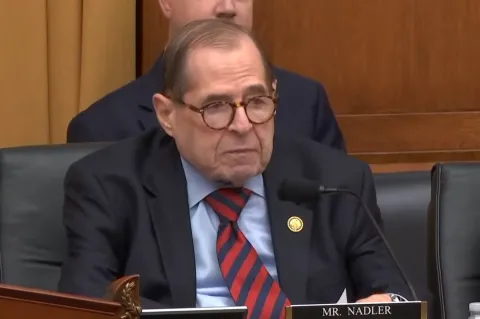
WATCH Ranking Member Nadler’s opening statement. Ranking Member Jerrold Nadler Mr. Chairman, with our nation plunging into a senseless war that has no defined goals and no end in sight; with gas prices skyrocketing; and with an affordability crisis that is draining Americans’ pocketbooks, and is only getting worse, a hearing to examine maritime shipping rules does not exactly meet the moment. The affordability crisis touches nearly every aspect of our lives. Staple grocery costs have risen more than three percent over the last year, causing many Americans to struggle just to put food on the table; rent and mortgage payments are stretching families’ budgets, with many young people priced out of the housing market altogether; utilities are up an average of twelve percent from last year; and health insurance premiums have gone through the roof, especially after Republicans let critical subsidies expire. And on top of all of this, gas prices have risen sharply since the war in Iran began and are climbing higher by the day. It is no wonder that consumer confidence is the lowest it has been since 2014. Americans are feeling the squeeze. But Republicans have done nothing to ease their pain—and many of their policies are only making it worse. The increased costs faced by consumers have been fueled, in large part, by the global trade war launched by President Trump last year, which has taken aim at friends and enemies alike. Instead of taking a targeted and thoughtful approach to trade that would protect American industries, workers, and consumers, Trump has taken a scattershot approach, imposing steep tariffs across the board that are driving up prices for American consumers and businesses, while doing very little to bring investment to our shores. By one estimate, American consumers have paid more than $230 billion in tariff costs since the Trump Administration began—that’s more than $1,700 per family. And even though the Supreme Court has struck down some of the tariffs, significant others remain, and any refunds that may be ordered by the courts would go to businesses, not consumers. At the same time, President Trump has taken this country to war with Iran, without making the case to the American public or seeking congressional authorization. Iran has now retaliated by shutting down the Strait of Hormuz, through which one-fifth of the world’s oil supply travels—a response that comes as a surprise to no one except Donald Trump. As a result, the price of oil is over $100 a barrel and gas prices are skyrocketing. Rigorous enforcement of the antitrust laws could be a powerful tool in the effort to address the affordability crisis, but instead this administration has corrupted the antitrust process—rewarding their political allies, punishing their perceived enemies, and firing the career professionals and other officials who have refused to cater to industry lobbyists or to carry out a toothless enforcement scheme. The ouster of the senior leadership in the DOJ’s Antitrust Division appears to have cleared the path for one of the most egregious examples of lax enforcement—the government’s sweetheart deal with Live Nation Ticketmaster. The monopolistic power of this company has been known ever since Live Nation and Ticketmaster first proposed merging in 2009. At the time, I joined my colleagues in warning about the impact it would have on consumers. Although the merger was approved, I am sad to say that our concerns turned out to be well-founded. Millions of Americans have felt the effects of Live Nation Ticketmaster’s anticompetitive practices. When they bought a ticket to a concert, performed in a local production, or worked at an auditorium, they saw how the company drove up ticket prices, limited tour dates, or prevented other companies from entering the market. Given this awful record, I sought reexamination of the merger by the antitrust enforcers in 2021. Thankfully, in 2024, the Biden Administration and 40 state attorneys general sued Live Nation Ticketmaster for monopolizing markets across the live entertainment industry. At the time, I said, “Since its merger in 2010, Live Nation Ticketmaster has engaged in boldly anti-competitive practices at the expense of consumers, entertainers, venues, and vendors. Instead of cooperating with the terms of its consent decree with the Department of Justice, the company has only grown more brazen in its tactics to corner the primary and secondary ticketing markets.” But despite having a slam dunk case, days into trial the Trump Administration suddenly settled the case for practically nothing—leaving venues, performers, and consumers out in the cold. The case was settled so abruptly that the judge even admonished the government and Live Nation Ticketmaster for their “absolute disrespect for the court, the jury, and the entire process.” This case is not only the most recent, but also one of the most damning, examples of how corrupted and feckless the Republican-controlled DOJ is. As one former antitrust official noted, “You really couldn’t send a clearer message that antitrust is dead at the federal level than settling this particular case.” Thankfully, most of the state attorneys general involved in the case rejected the settlement and vowed to continue the litigation. The Trump Administration, on the other hand, appears content to allow consumers to pay more for less. Such a sorry state of affairs cries out for congressional oversight, but the Republican Majority has been silent while the Trump Administration guts the antitrust enforcement agencies that should be protecting consumers, not companies. Mr. Chairman, market consolidation, unpredictable tariffs, and the war in Iran are all driving prices up—but this hearing is designed to address none of these pressing issues. By all means, we should examine the maritime shipping industry at some point. But the affordability crisis is urgent right now and it’s growing worse. That is where our attention should lie today. I yield back.
|