
Subcommittee Ranking Member McBath’s Opening Statement at Subcommittee Hearing on the Instrumental Role of Congress to Support All Victims of Sexual Violence
Washington, D.C. (April 29, 2026)—Today, Rep. Lucy McBath, Ranking Member of the Subcommittee on Crime and Federal Government Surveillance, delivered opening remarks at a subcommittee hearing examining the federal government’s vital duty to enact survivor-centered protections that support all victims of sexual violence and abuse.
Below are Ranking Member McBath’s remarks, as prepared for delivery, at today’s hearing.
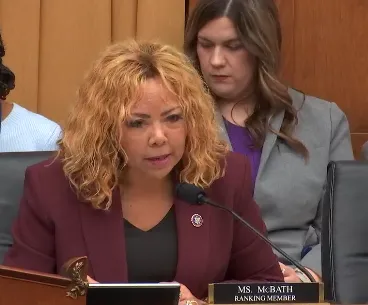
WATCH Ranking Member McBath’s opening statement.
Ranking Member Lucy McBath
Subcommittee on Crime and Federal Government Surveillance
“Peace of Mind: Strengthening Victim Protections Under Kayleigh’s Law”
April 29, 2026
Thank you, Chairman Biggs.
Under a Democratic Congress and Democratic President, we made significant investments in public safety and crime reduction, igniting a historic decrease in crime that is continuing today. But far too many Americans still face domestic violence, sexual violence, and abuse everyday. In fact, according to a recent FBI report, violent crime within domestic relationships has been increasing in recent years. In the United States, more than a third of women and more than a quarter of men experience rape, physical violence, or stalking by an intimate partner in their lifetime. And the effects of these crimes can be profound.
Survivors of these crimes have unique needs. Some survivors may find safety and peace of mind in pursuing a protective order that keeps their attacker away. Others may need medical care for their physical recovery, or trauma-informed counseling to regain their resilience.
Some survivors may want to work with law enforcement to hold an abuser accountable and ensure no one else endures the harms that they experienced. And still others may work to prevent violence against themselves and others by pursuing an extreme risk protection order to disarm those who have shown that they pose an imminent risk of committing deadly acts of violence. And this is just a small sample of the needs of survivors and the ways in which we can help them and prevent more crimes and more victims.
To protect and support survivors and to actually prevent these crimes from occurring in the first place, a comprehensive approach is vital. At times, that is exactly what Congress has provided through critical legislation like the Violence Against Women Act, the Victims of Crime Act, and the Family Violence Prevention and Services Act.
But these lifesaving bills and others like them fall short of their potential without adequate funding. Unfortunately, President Trump has repeatedly gutted programs that help victims, promote justice, and prevent crime. Last year, the Trump Administration abruptly terminated $500 million dollars in grant funding that reduced crime and improved public safety. The cuts included more than 50 grants in support of victim services, such as training to help nurses provide forensic examinations to survivors of sexual violence.
President Trump’s recently released proposed budget for fiscal year 2027 would further neglect the needs of victims. It proposes to cut tens of millions of dollars in grants from the Office of Violence Against Women, including cuts to housing and legal assistance that help survivors find safety. And these cuts are even more damaging given that the Crime Victims Fund—which serves over six million victims every year—is nearly depleted. That means six million victims of violent crime might be deprived of lifesaving support if we fail to prioritize the needs of victims and survivors and fight to restore the programs that we know work. We cannot let that happen. I ask my Republican colleagues to join me in committing to funding these services because what good is a protective order when a survivor can’t secure adequate housing to escape their abuser or trafficker, or the legal assistance to protect their rights or get custody of their children?
Victims and survivors must be given the support they need to heal and find stability. They must be listened to—no matter the wealth, status, or connections of the people who harmed them. Above all, they must be given the ability to choose how they chart their path toward recovery, justice, and safety.
I thank our witnesses for being here to elevate the needs of victims and survivors and help us promote and strengthen safeguards for all Americans.
I yield back.