
Subcommittee Ranking Member Johnson’s Opening Statement at Hearing on Balancing Affordability and Innovation with Medicine Patents
Washington, D.C. (June 4, 2026)—Today, Rep. Hank Johnson, Ranking Member of the Subcommittee on Courts, Intellectual Property, Artificial Intelligence, and the Internet, delivered opening remarks at a subcommittee hearing on how to best encourage innovation in the medical field while still maintaining low drug prices.
Below are Ranking Member Johnson’s remarks, as prepared for delivery, at today’s hearing.
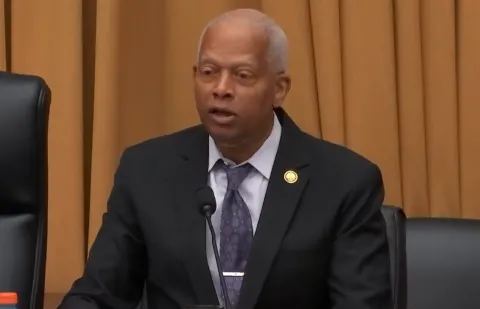
WATCH Ranking Member Johnson’s opening statement.
Ranking Member Johnson
Subcommittee on Courts, Intellectual Property, Artificial Intelligence, and the Internet
Hearing on “Medicines and IP: Balancing Innovation and Access”
June 4, 2026
Thank you, Mr. Chairman.
Our nation’s founders understood that when inventors are rewarded for their contributions, economic growth and human progress follow. More than two centuries later, the success of that vision is self-evident. From the lightbulb to the airplane to the medicines that save lives, patents have helped transform ideas into products that improve the lives of millions of Americans.
Patents have been at the heart of America’s greatest innovation moments. The Industrial Revolution, the Innovation Age, the biotech and mobile telecommunications revolutions in the twenty-first century, were all driven by transformative breakthroughs, backed by patent law.
By rewarding individuals’ ingenuity, patents continue the innovation cycle by also encouraging investment in new ideas. A patent must be reliable enough for an inventor to be able to convince investors to help transform a sketch on a napkin to a product that changes the world.
But it is not always easy. Anyone who works with innovators and inventors can tell you that unpredictability is the hallmark of innovations. Patents are granted to creations that are, among a few other requirements, new. To invent, one must do something that has never been done before. Individuals need the resources, investment, and most of all the promise that if they discover something new, they can own their idea, without someone stealing it.
Nowhere is this uncertainty more apparent than in the healthcare industry, where bringing a single new treatment to market can require billions of dollars in investment and more than a decade of research and development. Total R&D expenses for one single drug have been estimated to be 2.6 billion dollars, invested over an average of 10 to 15 years of research, testing, and development.
This all occurs before the company even knows whether the treatment will ultimately succeed or fail. Most drug candidates don’t make it through the FDA’s clinical trial process. So why do so many companies invest money and time to undertake the high-risk, high-cost work necessary to develop the next generation of cures for patients? Patents. When medical companies have an exclusive property right in their innovations, it can be financially worthwhile to go down the long road to approval for use. Strong patent protections are why the United States has been a global leader in the discovery and development of lifesaving medications, with more than one-half of all new drugs invented in the United States.
Reliable protections also encourage companies to continue to invest in improving existing treatments, because medical invention should not end when a drug reaches the market. Whether it is developing a safer formulation, reducing side effects, improving dosing schedules, or expanding a drug’s use to treat additional conditions, patents help create the incentives necessary to continue research long after the initial breakthrough. Manufacturers must be incentivized to continue investing in their product, ultimately leading to safer and more effective treatments for patients.
Perhaps most importantly, this innovation paves the way for future competition, because patents were never intended to be the end of the story but rather the beginning of a cycle of innovation, competition and progress. Encouraging investment in new medicines while also ensuring that competitors can enter the market when the lifespan of the patent is complete is essential. Competition helps lower drug costs, expand access and deliver enormous cost savings to patients.
But this is a symbiotic process; without strong patent protections to encourage innovation, there would be no new treatments for generic drug manufacturers to replicate and bring to market at a lower cost. Getting this balance right is extremely important because the cost of prescription drugs has soared too high for too long in this country. We spend more on prescription medications than residents of any other developed nation. The fact is that affordable healthcare is simply out of reach for most Americans.
Congress has made various attempts over the years to streamline and simplify the patent process, such as allowing the government to negotiate for drug prices for Medicare Part D, which went into effect earlier this year. But rising healthcare costs from companies simply seeking to raise their bottom line are still a problem outside of the patent space. PBM middlemen raise drug prices, insurance companies have increased discretionary denials while decreasing coverage, and mergers among healthcare providers prevent Americans from having options as to where they get their care. We should not have to accept high-priced healthcare as an inescapable American burden.
I look forward to hearing from the witnesses about how to best address this delicate balance and ensuring that we have a system that continues to reward breakthrough discoveries while ensuring that these discoveries are available to those they are meant to help.
I yield back the balance of my time.